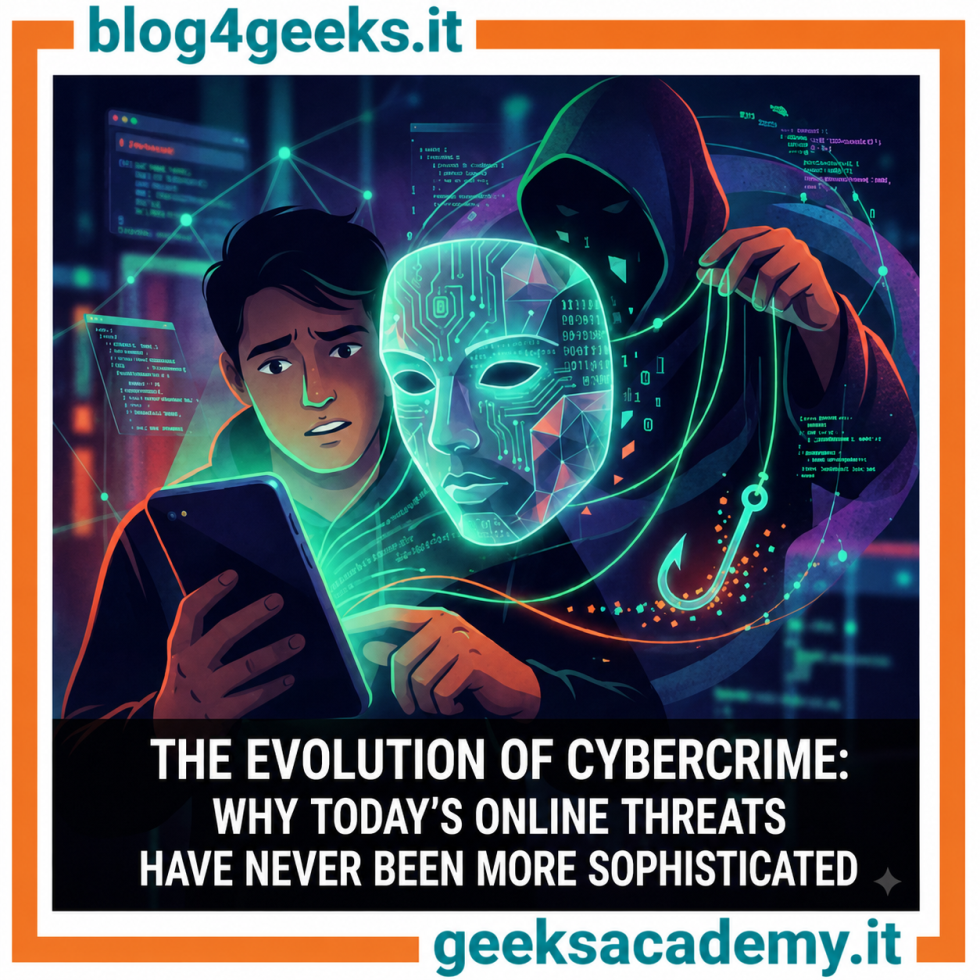
Artificial intelligence is making cyberattacks smarter, faster, and more convincing than ever before. Understanding how modern social engineering works is the first step toward protecting yourself and your organization.
Social Engineering 2.0
There was a time when online scams were easy to spot: poorly written emails, strange requests, and implausible messages. Today, that's no longer the case. Scams have become sophisticated, coherent, and perfectly believable. The reason is simple: artificial intelligence.
In 2019, the CEO of a British energy company received a phone call from his boss. The voice was familiar, the tone natural, and the request urgent: authorize a bank transfer. Everything seemed perfectly normal, so he complied. Only later was it discovered that the voice had been generated by an AI system capable of perfectly mimicking the executive's speech patterns.
In 2023, a multinational company became the victim of an extremely sophisticated real-time deepfake scam (the case was made public in 2024 and involved Hong Kong).
It all began in what appeared to be an ordinary way: a member of the finance team received a message inviting him to join an internal video call to discuss some urgent transactions. Nothing unusual—this happens every day. During the call, the employee saw the company's CFO along with several other colleagues. The setting was perfectly consistent with the company's day-to-day operations. People spoke, moved, and interacted naturally. There was nothing suspicious about the meeting.
At one point, the CFO, or rather, what appeared to be the CFO, requested that several urgent and confidential transactions be processed. The request seemed plausible, the context was appropriate, and the people involved were exactly who they appeared to be. The employee complied.
Only later did the truth emerge: none of the people on the call were real. Their faces were AI-generated deepfakes. Their voices were synthetic yet entirely convincing. Every interaction had been carefully crafted to appear authentic.
In other words, it wasn't a meeting. It was a simulation.
This is the new face of social engineering: no longer clumsy attempts at deception, but highly credible simulations of reality. AI enables attackers to study people, analyze contexts, and imitate voices and behaviors with astonishing accuracy. They no longer need to persuade you with something unusual. They simply need to appear authentic.
And that is precisely the point: the problem is not technological, it is human. When we receive an urgent request from someone we recognize, our brains are naturally inclined to act immediately. That response is perfectly human, and it is exactly what attackers exploit.
We live in a world where we work remotely, communicate through email, and participate in video calls every day. Trust has become digital, and today, it can easily be forged. A voice is no longer proof. A video is no longer a guarantee. A well-written message is no longer a sign of authenticity.
This doesn't mean becoming paranoid, it means becoming more aware. Pause for a moment. Verify important requests through another channel. Don't allow urgency to dictate your actions. Small habits can make a tremendous difference.
Because today, the real danger isn't what looks suspicious. It's what looks perfectly normal.
And perhaps the most important skill in the age of AI is not recognizing a scam, it's knowing when not to trust immediately.
How to Recognize a Scam (Even When It Looks Perfect)
1. Suspicious Urgency
If someone asks you to act immediately, to make a payment, send sensitive information, or click a link—stop and think. Urgency is one of the most effective manipulation techniques because it reduces your ability to reason critically.
Rule of thumb: If it's urgent, it deserves verification, not speed.
2. Authority That's "Too Direct"
Messages from CEOs, executives, or important clients requesting unusual actions are a classic tactic. Today, they can appear incredibly convincing—perfect emails, identical voices, flawless communication.
Ask yourself: Is this request consistent with the way this person usually communicates?
3. Realistic Context... but Slightly Out of Place
Modern scams are carefully crafted, but they often contain subtle inconsistencies:
Unusual timing or meeting schedules.
Requests that bypass established procedures.
Sudden changes in communication channels (for example, "Message me on WhatsApp instead of email.").
If something makes you think, "That seems a little strange..." trust that instinct.
4. Too Perfect
Here's the modern paradox: flawless emails with perfect grammar and an impeccable tone may very well be AI-generated.
Don't trust appearances alone. Context matters.
How to Truly Protect Yourself
1. Always Verify Through a Second Channel
This is by far the most effective defense. Have you received a sensitive request? Call the person directly. Send a message through another channel. Confirm before acting.
Never rely on a single source, especially if it's digital.
2. Slow Down Intentionally
These attacks succeed because they force you to react. Your goal is to do the opposite: respond thoughtfully rather than react impulsively.
Even a two-minute pause can save you from making a costly mistake.
3. Establish Clear Rules (Especially Within Organizations)
For example:
No bank transfers without dual approval.
No sharing of sensitive information via email.
Always require voice confirmation for critical requests.
Procedures are more reliable than improvisation.
4. Develop Healthy Skepticism
You don't need to become paranoid,but neither should you be naive.
Today, the right question isn't: "Does this look real?"
It's: "Has this been verified?"
5. Protect Your Online Presence
The less information attackers can find about you, the better.
Be mindful of what you share on LinkedIn.
Avoid revealing details about roles, internal processes, or organizational hierarchies.
Even seemingly innocent posts can provide valuable clues to attackers (for example, "First day with the finance team!").
What seems harmless to you may be highly valuable intelligence to someone else.